Tuesday, March 8, 2011
La Montagna in 7 parole - Compagnia
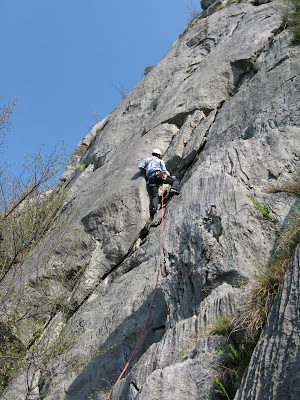
La montagna è compagnia
Incroci uno sconosciuto lungo un sentiero, e vi salutate. In qualsiasi altro ambiente ci si sarebbe limitati all’indifferenza, quando non al timore o al fastidio. Ma in montagna ci si saluta, e spesso ci si mette pure a parlare e scambiarsi esperienze, con una facilità disarmante, che solleva molti interrogativi sulla qualità dei nostri rapporti con le persone nella vita urbanizzata.
Forse ci si rende conto di trovarsi in un luogo impervio, spesso ostile alla vita, e per questo ci si sente più vicini; resta il fatto che in montagna il calore umano è abbondante, e i legami tra gli uomini si fanno più saldi, più profondi.
La dimensione tipica per vivere la montagna è quella dell’andare in compagnia, con gente fidata, a cui puoi affidare la tua vita in caso di difficoltà; forte è il senso di solidarietà e aiuto reciproco, come se tutti quanti stessero perseguendo lo stesso scopo in una grande squadra; completamente assente è l’irrisione per chi sbaglia, sostituita piuttosto da una preoccupazione per la sua incolumità. Insomma, la montagna è un ambiente che favorisce buone relazioni umane, e le tempra: da sempre la bontà di un affetto si verifica nelle difficoltà, e l’ambiente roccioso, duro e schietto, è il banco di prova ideale.
Friday, March 4, 2011
GET: impressions and jacket project
Monday and Tuesday I was in Switzerland for the first phase of the Gore Experience Tour - it was an exciting experience, and I’m looking forward to the next session (Urgnano BG, 14-15/03).

What happened in Switzerland? Well, the first day was about getting to know Mammut, which is one of the leading companies in high quality segment of the outdoor/mountain market - this means really exceptional and technical products at fairly high prices, and this is why I didn’t know the brand till last December! ;)
So we had a tour in the Mammut Headquarters, and were showed the rope-manufacturing process, which is quite interesting for me, because I rely my life on such ropes! It was somewhat funny to see that in the apparel design part of the tour, it was Lily and Gaz, the British finalists who studied Performance Sportswear Design, who asked questions (I didn’t understand all the details); in the rope-manufacturing, it was me!
What impressed me most of Mammut is the huge range of mountain products they have: technical clothing, hardware, ropes, sleeping bags, shoes... they cover nearly all the things a mountaineer can ever use! Of course this is achieved through large use of external suppliers who actually realize the products and the recent acquisitions of smaller but highly innovative companies (e.g. Raichl for the shoes), but the design, testing and quality control are in the hands of the headquarter, and they do an amazing job in creating consistent and innovative collections (every year a new collection, which consists in about 80 new products!).
The mountain jackets are of course exceptional - me and Yann (the French guy, a trekking enthusiast) were struck gaping at the Eiger Extreme collection (on the market in late 2011): you had to check with your eyes if you were wearing one of those jacket, so light and confortable they were: you couldn’t feel them!
The tour went on with a bit of fun in the local climbing gym, after a change of clothes with a set we were given as a gift (pants, tshirt, softshell gilet... one better than the other!).
There I knew once more that my style is about rock, not plastic; and long routes in the mountains, not single hard pitches.
Climbing for me is not just a sport, it’s much more, and involves seeing beutiful and hidden places, living adventures, pushing the limits of my mind, getting a bit closer to the heaven.

Anyway, after a really good dinner and a not so good night (the rooms were extremely hot, and the covers really heavy), we started designing our jackets!
For practical reasons (we are not experts in manufacturing, there is little time) we were given a jacket model (the Makalu Jacket) and a set of GoreTex of different colors, so we had to design our jacket by choosing the colors. In this way, the result should be good even if we are not professionals!
Here is the jacket I have come up with:

The hood is really good, and also the pockets are in the right places; I just have to check the sleeve lenght, so dynamic movements like those of climbing can be done without hinder.
Stay tuned for updates!
What happened in Switzerland? Well, the first day was about getting to know Mammut, which is one of the leading companies in high quality segment of the outdoor/mountain market - this means really exceptional and technical products at fairly high prices, and this is why I didn’t know the brand till last December! ;)
So we had a tour in the Mammut Headquarters, and were showed the rope-manufacturing process, which is quite interesting for me, because I rely my life on such ropes! It was somewhat funny to see that in the apparel design part of the tour, it was Lily and Gaz, the British finalists who studied Performance Sportswear Design, who asked questions (I didn’t understand all the details); in the rope-manufacturing, it was me!
What impressed me most of Mammut is the huge range of mountain products they have: technical clothing, hardware, ropes, sleeping bags, shoes... they cover nearly all the things a mountaineer can ever use! Of course this is achieved through large use of external suppliers who actually realize the products and the recent acquisitions of smaller but highly innovative companies (e.g. Raichl for the shoes), but the design, testing and quality control are in the hands of the headquarter, and they do an amazing job in creating consistent and innovative collections (every year a new collection, which consists in about 80 new products!).
The mountain jackets are of course exceptional - me and Yann (the French guy, a trekking enthusiast) were struck gaping at the Eiger Extreme collection (on the market in late 2011): you had to check with your eyes if you were wearing one of those jacket, so light and confortable they were: you couldn’t feel them!
The tour went on with a bit of fun in the local climbing gym, after a change of clothes with a set we were given as a gift (pants, tshirt, softshell gilet... one better than the other!).
There I knew once more that my style is about rock, not plastic; and long routes in the mountains, not single hard pitches.
Climbing for me is not just a sport, it’s much more, and involves seeing beutiful and hidden places, living adventures, pushing the limits of my mind, getting a bit closer to the heaven.
Anyway, after a really good dinner and a not so good night (the rooms were extremely hot, and the covers really heavy), we started designing our jackets!
For practical reasons (we are not experts in manufacturing, there is little time) we were given a jacket model (the Makalu Jacket) and a set of GoreTex of different colors, so we had to design our jacket by choosing the colors. In this way, the result should be good even if we are not professionals!
Here is the jacket I have come up with:
- Dark Cyan and Gray
- Black zippers
- Red pullers
- GoreTex Pro Shell (the most rugged waterproof textile)

Jacket design: click to enlarge.
The hood is really good, and also the pockets are in the right places; I just have to check the sleeve lenght, so dynamic movements like those of climbing can be done without hinder.
Stay tuned for updates!

Wednesday, March 2, 2011
La Montagna in 7 parole - Limite
La montagna è limite
Senza dubbio le pareti rocciose sono nell’immaginario collettivo tra quei posti dove l’uomo non ha vita facile, ma anzi viene minacciato di morte, non appena oltrepassi un certo limite: della difficoltà, del rischio, della sicurezza, dell’esperienza. La montagna è da sempre luogo “al limite”, per l’uomo, che tuttavia continua a tornarvi. Forse perché, a essere sinceri con se stessi, si riconosce che l’esperienza del limite e dell’esser limitati è pienamente umana, in tutti i campi e i tempi della vita, fino al limite supremo che tutti attende. Oggi spesso questa franchezza viene evitata, mentre cerchiamo di allontanare i nostri limiti con protezioni e assicurazioni e medicinali; si tratta però solo di rimedi superficiali, che se possono essere utili non devono però drogare la nostra consapevolezza, perché è solo riconoscendo i nostri limiti che si può giungere a quella “sapienza del cuore” che permette di vivere pienamente, senza lasciarsi schiacciare dalla paura e dal sospetto che qualcuno ce l’abbia con noi.
La montagna, nel suo essere spesso dura e mai scontata, è un ottimo allenamento per la vita: lassù non c’è spazio per le illusioni di onnipotenza, e ognuno è messo di fronte ai propri limiti, che vanno accettati per come sono e letti sapientemente perché indicano, come tutti i limiti, quale sia la via da percorrere per non perdere la propria vita.
Wednesday, February 23, 2011
Features of my ideal jacket
This is my second post (here the first) about my ideal jacket, which I’ll try to create during the Gore/Mammut Experience Tour - 4 days visiting the Mammut headquarters and laboratories when I’ll have the opportunity to build my own unique jacket.
This time I’ll speak about practical features I’d like from my jacket, in the spirit of the five principles I focused on before (durability, windproofness, waterproofness, freedom of movement, usability). As an engineer, after the ideation phase, I have to “get real”, choosing practical solutions to problems and desired characteristics. And the quality of such solutions makes the whole feeling of the product: perfect details means great products, while poor design or materials means an overall “cheap” experience.
Winter alpine climbing on Mount Resegone, near Lecco.
Now, about the features, considering that I’m going to to alpine climbing, multipitch rockclimbing and snow activities, I came up with these, ordered from the physical top to the bottom:
It remains open one of the biggest questions: what materials to use. Gore-tex Pro Shell? Or the new Active Shell? Or other types?
- A good hood: it should be helmet-compatible, and possibly protect the face up to the nose, to be a good shelter from the cold wind; the top of the hood should be given a cap-shape, in a way that protects from the rain while not covering the eyes and obstructing the sight.
- Shoulder freedom: the arm should be as free to move as possibile, so extreme care should be taken in designing this part of the jacket; stretch textile could be a nice solution.
- Adjustable cuffs: so that wind and snow can’t get in. A bonus feat could be an extension of the sleeve with a thumb hole, which can replace gloves in case of mild cold.
- Pockets in the right places: this also mean few pockets, because too many pockets make the jacket stiff, and you don’t need too many pockets. For me, two lateral pockets you can put your hands/gloves into are the most useful; an importat detail is that the internal of these pocket should be of a material immune to velcro: I have gloves who have a bit of velcro on their surface, and I don’t want them to stick to the pocket internals every now and then! The third and last pocket should be on the chest, in the inside: a good place for a mobile phone, o eventually a small camera, where it’s not completely exposed to the cold weather (electronics go awry in the cold).
- Protection for the back: among the worst things are snow in the pants, or cold wind up your back! So an elongated back section is a must.
- Waterproof zippers: of course! In addition, the zippers should be usable even with large and clumsy gloves. The front zipper, the one which opens the jacket, could benefit from a 2-way zipper, which comes in handy when wearing climbing gears; the pocket zippers are ok with a standard 1-way zipper, which enhanches consistency (for example you know that if the pocket is closed you always have to zip-down to open it).
- Vibrant colors: alongside with a design matter, colors are important in case of a mountain rescue, so people can see you easily. So red, electric blue, yellow, orange, vibrant green are ok. The problem now is how to mix up them! But this is another challenge ;)
It remains open one of the biggest questions: what materials to use. Gore-tex Pro Shell? Or the new Active Shell? Or other types?
Thursday, February 17, 2011
Thoughts about my ideal jacket

November, climbing in Grignetta, via Normale on Torrione del Cinquantenario (photo by Marco).
As the first part of the Gore/Mammut Experience Tour (here, and here) gets closer, I’m writing down some impressions and annotations I have made about what I think a super-jacket shoud have.
First of all, there is a choice to be made: do I want a mountain jacket, or a city-but-sporty-and-cool-looking jacket? For me, there is only one possible answer, of course the first; but it’s important to get it straight, so when I have to choose between usability and looks, or toughness and comfort, I can choose well - because I think that attributes like these can sometime be opposites.
So here are some features I’d like:
First of all, there is a choice to be made: do I want a mountain jacket, or a city-but-sporty-and-cool-looking jacket? For me, there is only one possible answer, of course the first; but it’s important to get it straight, so when I have to choose between usability and looks, or toughness and comfort, I can choose well - because I think that attributes like these can sometime be opposites.
So here are some features I’d like:
- Durability: I want a jacket that can withstand use and abuse, if possible. I’m thinking of alpine climbing, for example, where you often have to hug and rub against rocks, which can be spiky and sharp. This feat is possibly in contrast with breathabilty, but is for sure more important since climbing is an activity I’ll do with this jacket.
- Freedom of movement: since I have to climb, I can’t be too much hindered by the jacket! So I’d like a fit cut, so the jacket stays close to my body; and the ideal would be a stretchable textile, so that you feel free to move the arms the way you like.
- Windproof: this can seem a trivial feat, but what I mean is that I expect my jacket to block all the wind that can enter in the neck, and cuff, and waist zones. So a hood is necessary, and it should be adjustable so that it blocks wind from the mouth/nose downward, so that wind can’t slip inside; helmet compatibility is also a must. Adjustable cuffs and waist are also useful.
- Waterproof: there is little to say about this; in my case, while climbing you can get wet if you rub against wet rocks, or if drops come from above; and rain and snow can always reach you (even if I don’t usually go in the mountains in bad weather).
- Usability: I want a jacket where every detail is there because it’s useful: convenience and practicalness must be the leading principles of the garment; if it’s also good looking, even better, but just as a second thought.

On the top of Grignetta, half January, wearing the Montura Soft Shell (photo by Dany).
Till now, my best mountain jacket (also for budget reasons) has been a Soft Shell by Montura, and Italian firm. I’ve been very satisfied of the versatily of this jacket, which is on top level in nearly every field; of course, it lacks the waterproof feat, which is quite important, especially if you want to live high mountain adventures (and this summer I’m going for the Monte Bianco and the eternal North Edge of Piz Badile!). So this Experience Tour is real manna from the sky!
Ok, this is a start. In the next post I’ll talk about practical features.
Saturday, February 12, 2011
La Montagna in 7 parole - Danza
Seconda "parola" con cui descrivo la montagna. English post below

La montagna è una danza
I primi passi in montagna ricordano quelli mossi da un bimbo: incerti e mal equilibrati, un incedere a tastoni. Assuefatti al piatto e liscio cemento e a scarpe più decorative che pratiche, dobbiamo imparare a muovere il nostro corpo in uno spazio pienamente tridimensionale. Una volta superato lo shock, si inizia ad apprezzare la sfida: ogni passo è un gioco di equilibri, forze e posizione del proprio corpo da capire, da gustare. La fatica poi arriva a complicare il tutto, con il suo velo di pesantezza e di sudore. Una nuova sfida che si può vincere con la pazienza e la perseveranza, virtù rare ma necessarie alla vita; e lo stesso corpo che nella salita si lamentava, una volta giunto alla meta lancerà segnali di soddisfazione e gratitudine. Così è il nostro corpo, che giustamente ci tiene aggiornati sul suo stato perché possiamo fare le scelte migliori, ma che segretamente aspira ad essere messo alla prova, perché ogni arto e muscolo e tendine sia utile.
E quando l’esperienza ci avrà formati, l’allenamento irrobustiti e l’equipaggiamento ci avrà dato fiducia, scopriremo che muoversi in montagna è come una danza libera, elegante ed armonica, perfetta unione tra la creatività della mente e la sapienza del corpo.
I primi passi in montagna ricordano quelli mossi da un bimbo: incerti e mal equilibrati, un incedere a tastoni. Assuefatti al piatto e liscio cemento e a scarpe più decorative che pratiche, dobbiamo imparare a muovere il nostro corpo in uno spazio pienamente tridimensionale. Una volta superato lo shock, si inizia ad apprezzare la sfida: ogni passo è un gioco di equilibri, forze e posizione del proprio corpo da capire, da gustare. La fatica poi arriva a complicare il tutto, con il suo velo di pesantezza e di sudore. Una nuova sfida che si può vincere con la pazienza e la perseveranza, virtù rare ma necessarie alla vita; e lo stesso corpo che nella salita si lamentava, una volta giunto alla meta lancerà segnali di soddisfazione e gratitudine. Così è il nostro corpo, che giustamente ci tiene aggiornati sul suo stato perché possiamo fare le scelte migliori, ma che segretamente aspira ad essere messo alla prova, perché ogni arto e muscolo e tendine sia utile.
E quando l’esperienza ci avrà formati, l’allenamento irrobustiti e l’equipaggiamento ci avrà dato fiducia, scopriremo che muoversi in montagna è come una danza libera, elegante ed armonica, perfetta unione tra la creatività della mente e la sapienza del corpo.
_______________
Mountain is a dance
The first steps in the mountains are like those of a child: unsteady and unbalanced, a groping pace. We’re addicted to the smooth and flat concrete and to shoes more decorative than practical, and we have to learn to move our body in a fully tridimensional space. Once you get through the shock, though, you begin to appreciate the challenge: every step is a game of equilibriums, forces and body postions that you can understand and taste.
Tiredness then comes to complicate things, with its veil of weight, and sweat. A new challenge that you can win through patience and perseverance, rare but necessary virtues for life; and the same body which complained during the ascent, once on the top will signal pleasure, and satisfaction, and gratitude. Such is our body: it keeps us updated on its status so we can make the right choices, but it secretly strives to be tested so every limb and muscle and tendon can be useful.
And when experience has formed us, training strenghtened us and equipement given us confidence, we’ll find that moving in the mountains is like a free dance, elegant and harmonic, the perfect match between creativity of the mind and wisdom of the body.
Tiredness then comes to complicate things, with its veil of weight, and sweat. A new challenge that you can win through patience and perseverance, rare but necessary virtues for life; and the same body which complained during the ascent, once on the top will signal pleasure, and satisfaction, and gratitude. Such is our body: it keeps us updated on its status so we can make the right choices, but it secretly strives to be tested so every limb and muscle and tendon can be useful.
And when experience has formed us, training strenghtened us and equipement given us confidence, we’ll find that moving in the mountains is like a free dance, elegant and harmonic, the perfect match between creativity of the mind and wisdom of the body.
Thursday, February 10, 2011
La Montagna in 7 parole - Bellezza
(English post below)
“Perché la montagna?”: una domanda lecita che mi viene spesso rivolta; in sette parole "a puntate" ecco la mia risposta, sperando di suscitare la curiosità di chi ancora non conosce i monti, e di riaccendere la passione di chi già li ama.
La montagna è bellezza
Picchi e gole, pareti a precipizio e dolci vallate boscose, maestose vette innevate e piccoli ghirigori rocciosi formano disegni mai banali, in cui l’occhio si perde perché non riesce a cogliere con un solo sguardo tutta la complessità di un panorama montano; e allora ci si ferma, senza parole, perché nemmeno il linguaggio riesce a rendere la bellezza complessa di una montagna. Ci si può solo arrendere all’evidenza: siamo di fronte a qualcosa di così bello, grande e complesso che non possiamo avere il controllo della situazione. E questa forse è l’essenza della bellezza: qualcosa talmente straordinario da trascenderci di molto, e davanti al quale possiamo solo balbettare un “è bello...”.
Straordinaria è pure la ricchezza di bellezze di tipo diverso tipica della montagna: c’è chi rimane estasiato dall’imponenza di grandi cime e chi dal verde di un prato in un angolino nascosto, chi dalle sorprendenti forme della roccia lavorata dai millenni e chi dai panorami che spaziano ampi sul mondo. Si potrebbe continuare, ma di esaurire le possibilità della montagna non se ne parla: basta girare uno spigolo, salire al di sopra del prossimo colle per trovare qualcosa di nuovo, inaspettato.
Picchi e gole, pareti a precipizio e dolci vallate boscose, maestose vette innevate e piccoli ghirigori rocciosi formano disegni mai banali, in cui l’occhio si perde perché non riesce a cogliere con un solo sguardo tutta la complessità di un panorama montano; e allora ci si ferma, senza parole, perché nemmeno il linguaggio riesce a rendere la bellezza complessa di una montagna. Ci si può solo arrendere all’evidenza: siamo di fronte a qualcosa di così bello, grande e complesso che non possiamo avere il controllo della situazione. E questa forse è l’essenza della bellezza: qualcosa talmente straordinario da trascenderci di molto, e davanti al quale possiamo solo balbettare un “è bello...”.
Straordinaria è pure la ricchezza di bellezze di tipo diverso tipica della montagna: c’è chi rimane estasiato dall’imponenza di grandi cime e chi dal verde di un prato in un angolino nascosto, chi dalle sorprendenti forme della roccia lavorata dai millenni e chi dai panorami che spaziano ampi sul mondo. Si potrebbe continuare, ma di esaurire le possibilità della montagna non se ne parla: basta girare uno spigolo, salire al di sopra del prossimo colle per trovare qualcosa di nuovo, inaspettato.
__________________________________________
Mountains in 7 words - Beauty
"Why mountains?" is a legitimate and often asked question: this is my answer, in seven words (here is the first one). I hope to arouse the curiosity of those who don't know the mountains, and to inflame the passion of those who already love them.
__________________
Mountain is Beauty
Peaks and ravines, cliffsides and smooth woody valleys, mighty and snowy summits and small rocky scribblings form never trivial drawings which make your eye lose, because it can’t catch with a single look all the complexity of a mountain view; and you stop, wordless, for nor even language can express the complex beauty of a mountain. You can just surrender to evidence: you’re in front of something such beautiful, vast and complex that you can’t be in control of the situation. And this is maybe the essence of beauty: something so extraordinary that goes much beyond us, of which one can only babble “it’s beautiful...”.
Extraordinary is also the richness of different beauties in the mountains: someone is entranced by great peaks and some other by the quiet green of a field in a hidden valley, some by the ever surprising shapes of the rock, wrought by millennia, and others by a 360 degrees landscape on the top. We could go on, but we can never deplete the possibilities of a mountain: it takes just moving around a corner, going up the next hill to find something new and unexpected.
Peaks and ravines, cliffsides and smooth woody valleys, mighty and snowy summits and small rocky scribblings form never trivial drawings which make your eye lose, because it can’t catch with a single look all the complexity of a mountain view; and you stop, wordless, for nor even language can express the complex beauty of a mountain. You can just surrender to evidence: you’re in front of something such beautiful, vast and complex that you can’t be in control of the situation. And this is maybe the essence of beauty: something so extraordinary that goes much beyond us, of which one can only babble “it’s beautiful...”.
Extraordinary is also the richness of different beauties in the mountains: someone is entranced by great peaks and some other by the quiet green of a field in a hidden valley, some by the ever surprising shapes of the rock, wrought by millennia, and others by a 360 degrees landscape on the top. We could go on, but we can never deplete the possibilities of a mountain: it takes just moving around a corner, going up the next hill to find something new and unexpected.
Subscribe to:
Posts (Atom)